
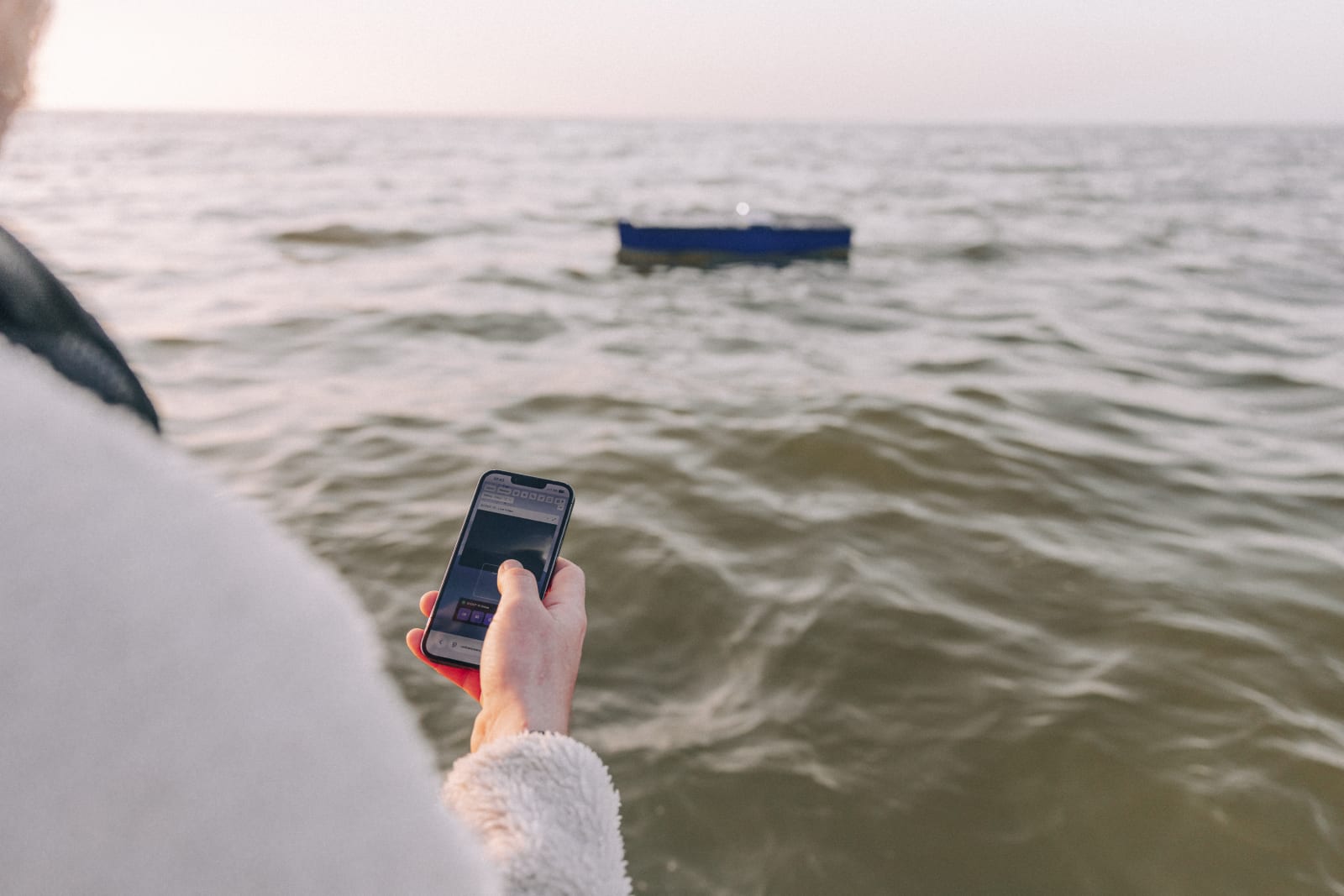
What is a USV?
A USV (uncrewed surface vehicle), also called an autonomous surface vehicle or uncrewed surface vessel, is a self-navigating boat that collects ocean data without a crew on board. Because it works on the surface, a USV can run on solar power for long endurance and send data live over satellite, unlike an AUV or glider that operates subsea with limited communications.
Scout USV is designed to be the most accessible platform in this class: small enough for one person to launch from a beach or slipway, cheap enough to deploy as a fleet, and rugged enough to stay out for months.
Specifications
What Scout does
- Persistent ocean data collection above and below the surface, for months at a time
- Holds station with a virtual anchor, or transits along a planned route
- Streams data to secure cloud dashboards and an API in real time
- Operates as a single vehicle or a coordinated swarm via Tether
Payload configurations
Scout carries the sensors your mission needs. See the full payload configurator:
Scout Detect
Maritime domain awareness: cameras, acoustic arrays, AIS/VHF/RF.
Scout Metocean
Wave, wind, temperature and pressure for offshore operations.
Scout Adapt
Open bay, 24 V power and Ethernet to bring your own sensor.
How Scout compares
Against a crewed research or survey vessel, Scout collects equivalent data continuously for months at roughly 200× lower cost, with no crew, fuel or port infrastructure. Against larger USVs, Scout trades range for accessibility and price, so you can field several units for the cost of one. See the data-as-a-service option if you would rather receive data than own hardware.