
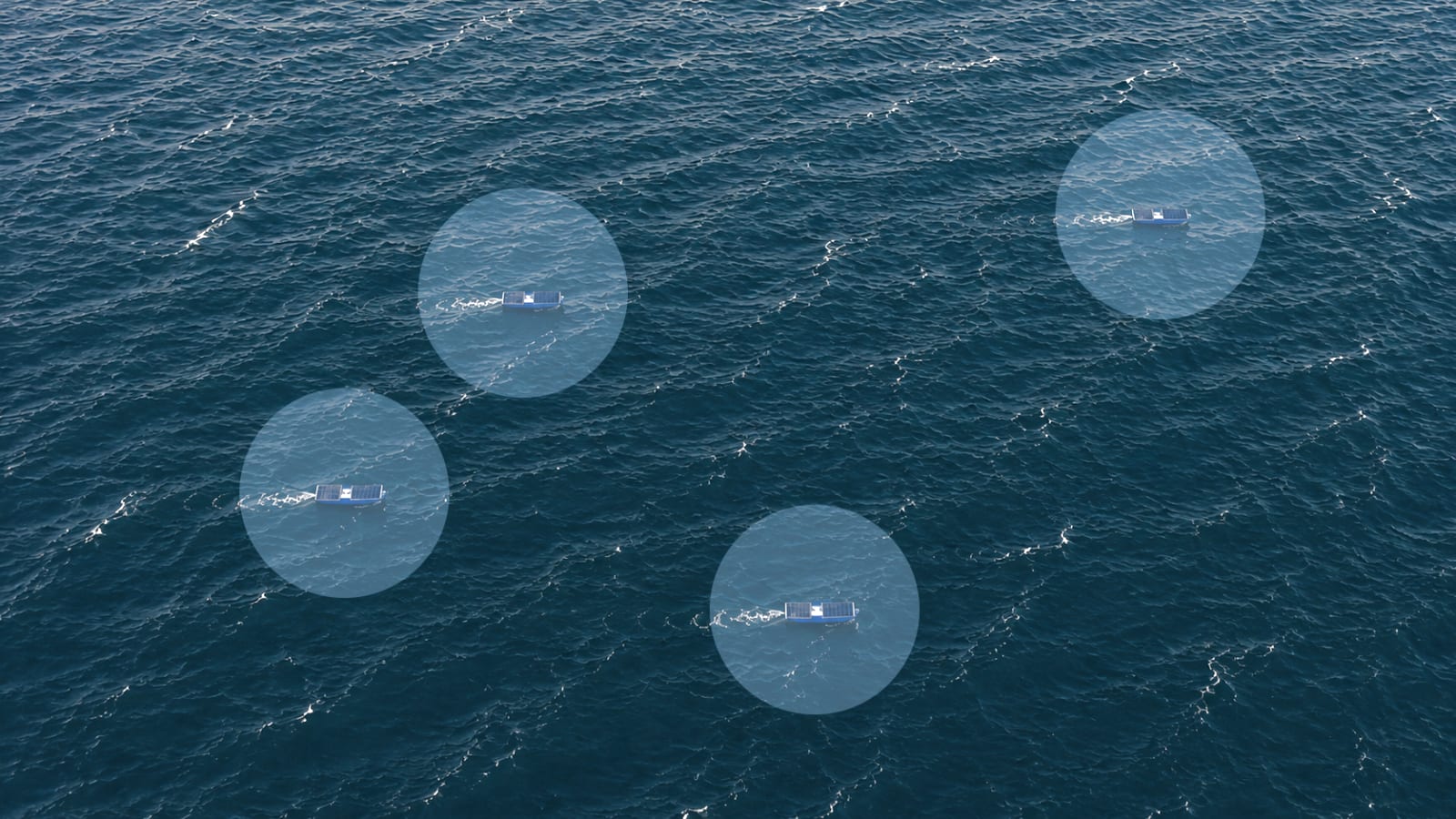
Tracking and re-tasking underwater vehicles from Scout
The challenge
Underwater vehicles are hard to keep tabs on. Once an AUV, UUV or glider dips below the surface, GPS is gone, and operators are left relying on dead reckoning and scheduled surfacing to know where their asset is. The conventional answer is a crewed vessel holding station overhead with a tracking system, burning fuel and day rates for the length of the mission. And when a vehicle goes quiet, the cost and delay of mounting a search can turn a minor fault into a lost asset.
Operators needed a way to track, communicate with and re-task underwater vehicles continuously, without a crewed ship in the loop.
The solution
Online Oceans integrated Sonardyne's Micro-Ranger 2 USBL system onto Scout. The Micro-Ranger Transceiver (MRT) is mounted on Scout's keel, placing the omni-directional transducer well below turbulent surface water for clean, reliable acoustic performance.
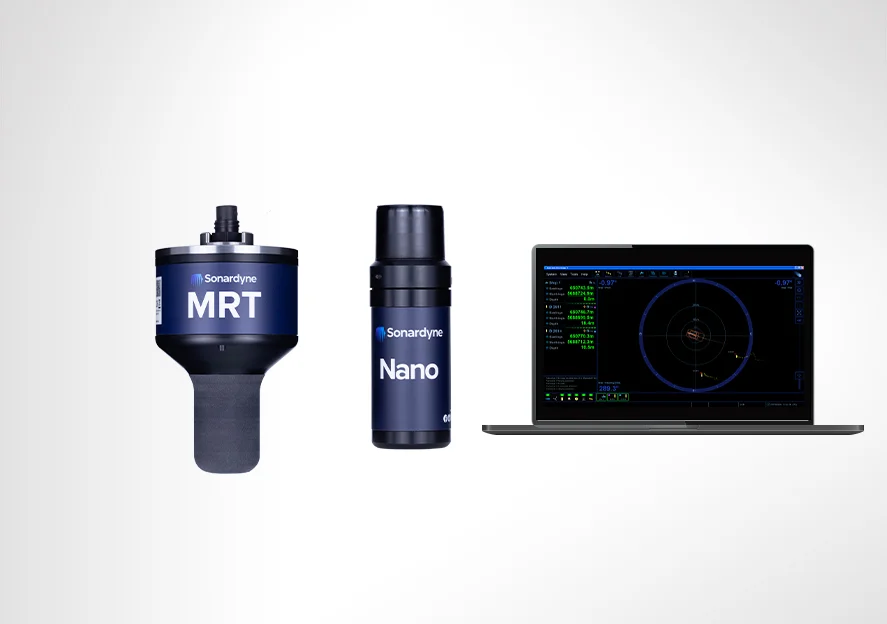
Sonardyne Micro-Ranger 2: MRT transceiver, Nano transponder and tracking software
The pairing is a natural fit. Micro-Ranger 2 was engineered for deployment from small and uncrewed vessels, and Scout provides exactly what a USBL system wants: a stable, quiet, persistent platform that can hold position or shadow a moving target for weeks at a time. Position data and vehicle telemetry are backhauled over Scout's Starlink and Iridium links to Tether, our command and control platform, giving operators ashore a live picture of their subsea assets from anywhere.
With Sonardyne's Marine Robotics pack, the system goes beyond tracking. Two-way acoustic messaging lets operators send commands down through Scout to the vehicle, enabling re-tasking mid-mission without the vehicle ever needing to surface.
In service offshore
This is not a paper capability. Scout is operating with customers offshore now, running multi-day underwater vehicle tracking missions in waters around England, Wales and Scotland.
On a recent mission, Scout held simultaneous acoustic lock on two underwater vehicles, following one to a depth of 138m while streaming live positions, depths, speeds and headings back to operators ashore.
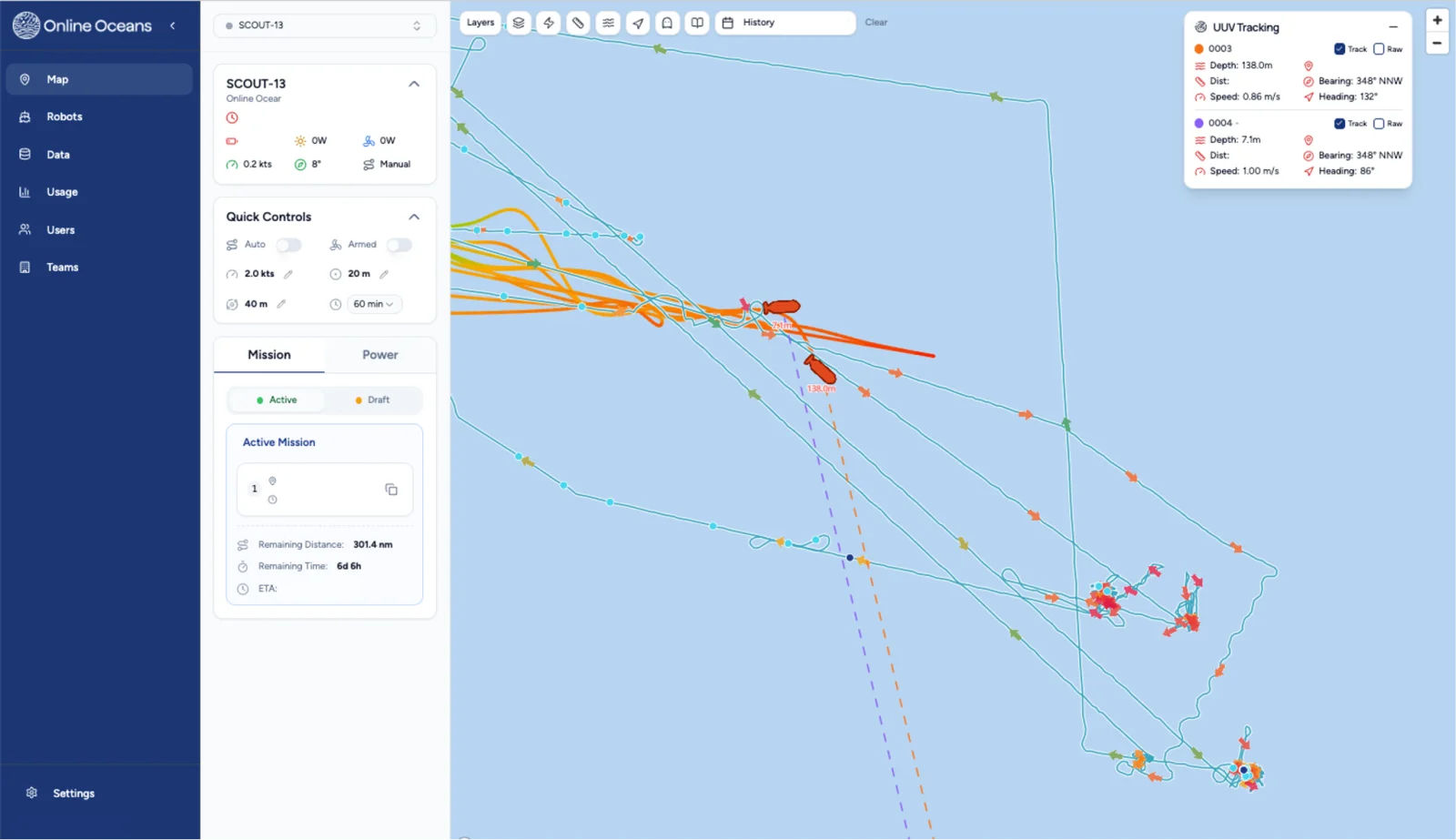
Tether on a live mission: two UUVs tracked from Scout, one at 138m depth
Across these missions, Scout has:
- Continuously tracked UUVs while transiting at 2.5 knots, maintaining acoustic lock while both platforms were under way
- Re-tasked vehicles via acoustic communications, relaying operator commands from shore through Tether to the submerged asset in near real time
- Executed autonomous search patterns to reacquire a vehicle in a simulated lost asset scenario, demonstrating recovery of contact without any human intervention on the water
Keeping eyes on a submerged vehicle has always meant keeping a ship overhead. Scout does the same job for months at a time, and a fleet of them costs less than a season of vessel day rates.
George Morton · CEO, Online Oceans
Why it matters
A single operator ashore can now maintain persistent tracking and communications coverage over underwater vehicles anywhere Scout can sail, with no crewed vessel, no fuel and no day rate. At a fraction of the cost of a ship, fleets of Scouts can provide tracking and comms gateways across wide areas, extending the reach and endurance of underwater operations for defence, science and industry.
For subsea vehicle operators, that means:
- Continuous situational awareness of submerged assets without scheduled surfacing
- Mid-mission re-tasking so vehicles respond to changing priorities without breaking cover or wasting endurance
- Months of coverage from a single deployment, thanks to Scout's solar-electric persistence
System at a glance
Bring us your vehicles
If it carries a Sonardyne 6G transponder, Scout can track it, talk to it and re-task it. Learn more about the Scout USV, or see how the same acoustic gateway supports subsea data harvesting from seabed instruments.