
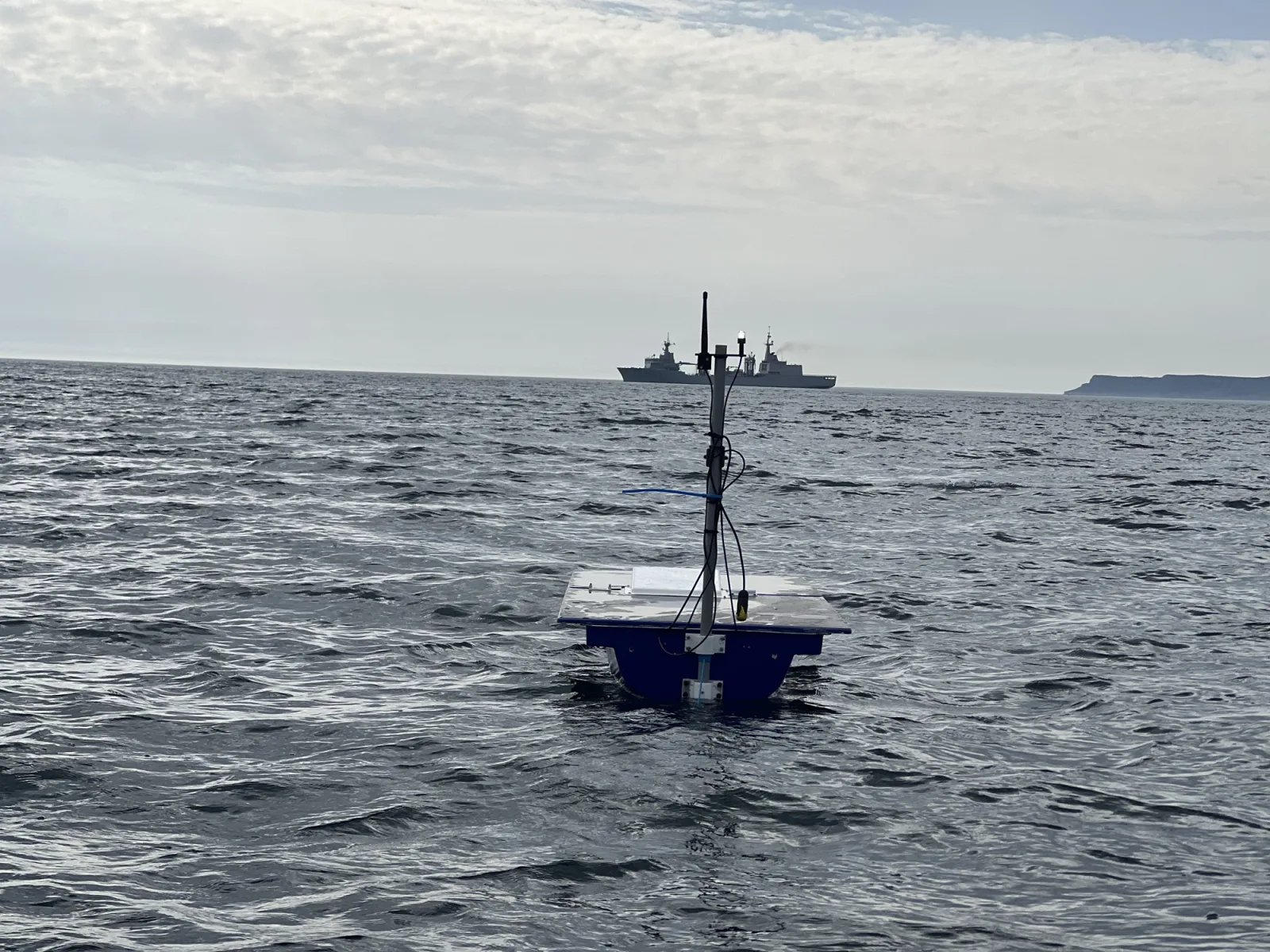
REPMUS: a Scout swarm tracking AUVs for ASW
The challenge
Anti-submarine warfare is a numbers problem. Detection coverage scales with hydrophones in the water, and the conventional ways of putting them there are expensive: a crewed asset gives you one sensor position at a very high day rate, and coverage disappears the moment the platform is tasked elsewhere. Navies need wide-area, persistent acoustic coverage at a cost that allows scale.
The solution
At REPMUS, NATO's maritime unmanned systems experimentation exercise, we deployed multiple Scouts carrying hydrophone payloads to provide distributed passive acoustic coverage across an area. Each Scout was launched from shore by one person. Coordinated through Tether, our command and control platform, the Scouts worked as a swarm rather than as individual vehicles, tasked as one using Tether's Picket, Convoy and Cover swarm behaviours.
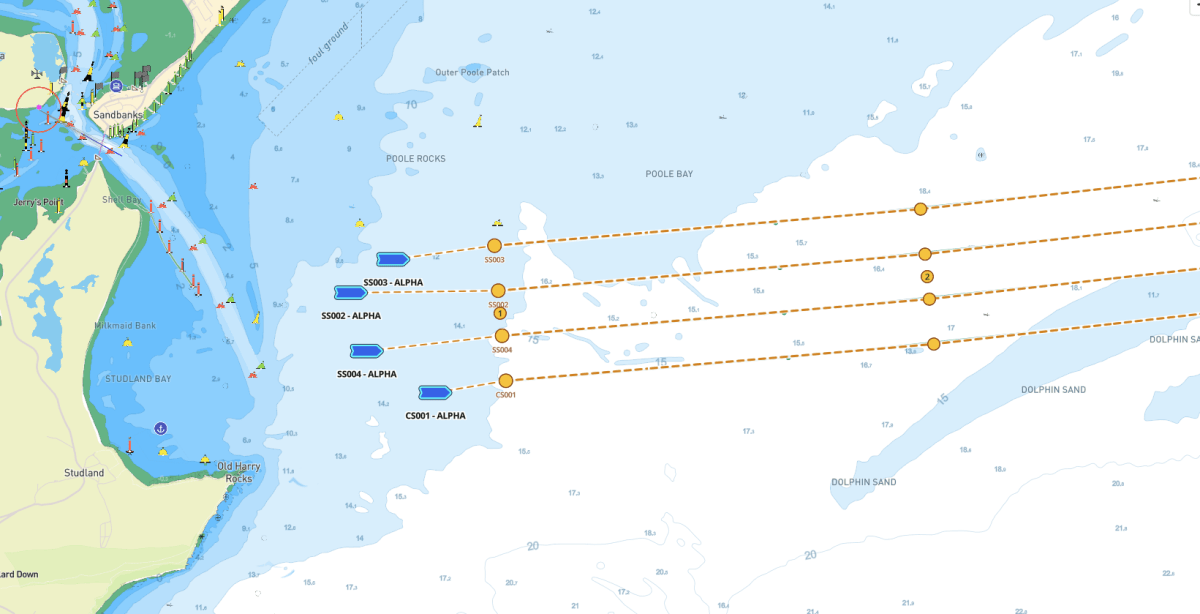
Tether swarm control: the fleet tasked as one
Delivered
The swarm detected and tracked autonomous underwater vehicles (AUVs) operating in the exercise area, demonstrating a low-cost, scalable approach to ASW sensing: many more hydrophones in the water than a single crewed asset provides, for a comparable cost.
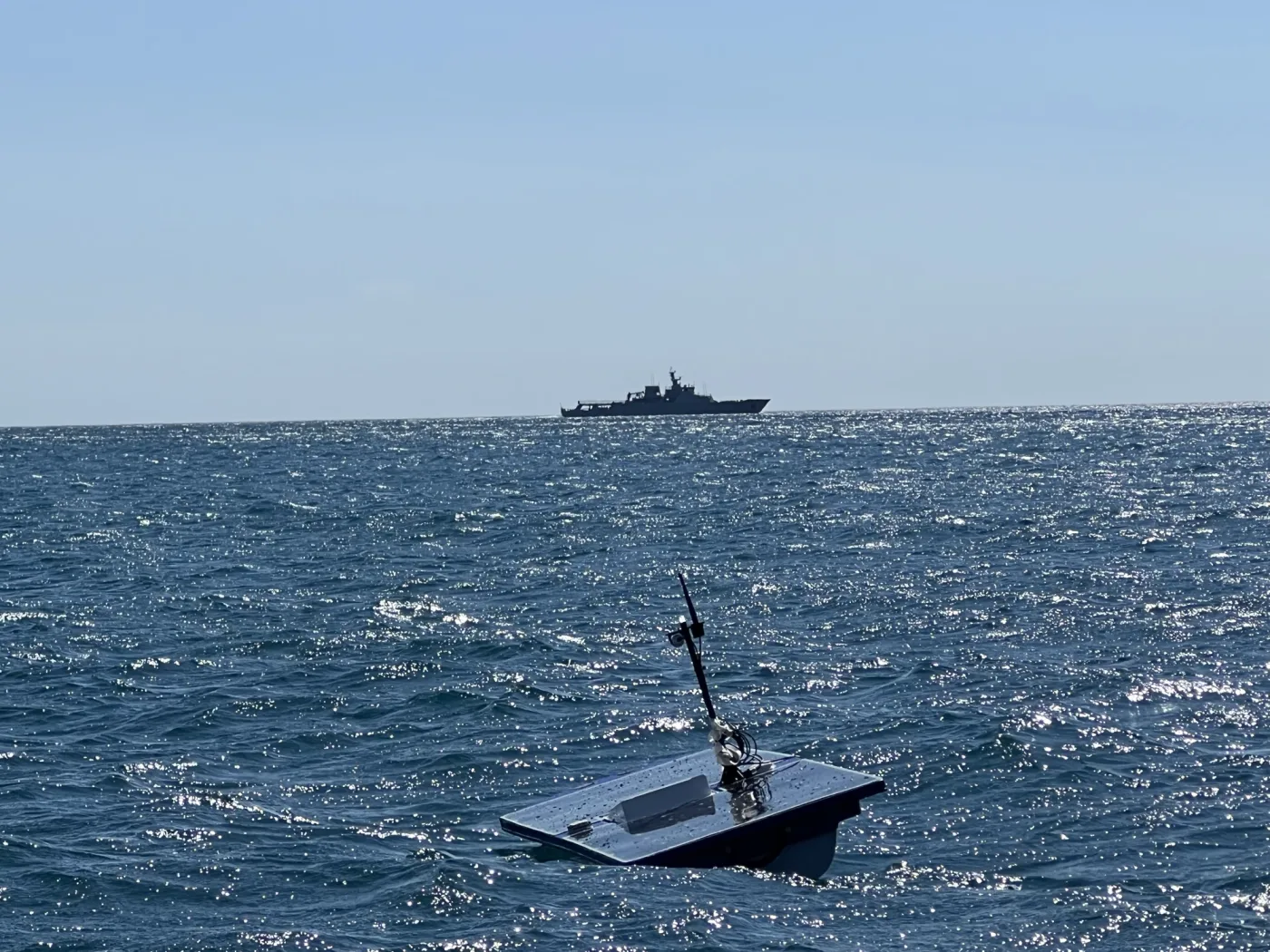
Scout on station in the exercise area, NATO warship astern
Why it matters
Distributed, attritable sensing changes the economics of underwater domain awareness. Instead of concentrating capability in one expensive hull, a Scout swarm spreads it across many cheap ones.
- Coverage that scales: add hulls to widen the net, at a unit cost that permits fleets
- Persistence: solar-electric Scouts hold their positions for months, not sortie lengths
- No exposed crew and no high-value platform tied up on picket duty
- One-person shore launch per vehicle, with no crane, port or support vessel
Bring us your mission
The same swarm approach applies to persistent barrier patrols, exercise support and wide-area surveys. See defence and security applications, or how Scout tracks and re-tasks underwater vehicles with USBL.